
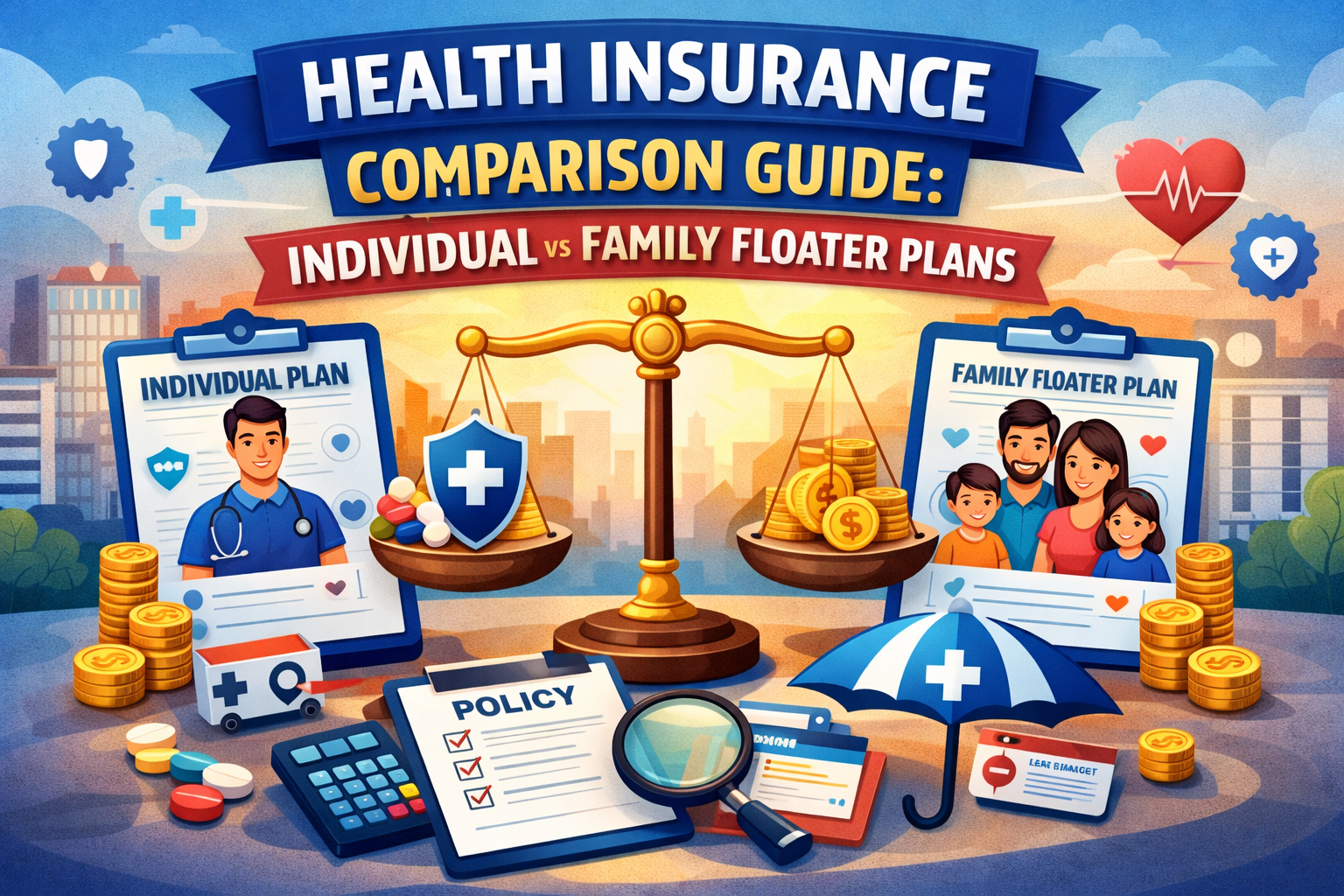
Why Health Insurance Comparison Matters More Than Ever in 2026
Healthcare costs in India are rising faster than household incomes. A single hospitalisation in a metro city can easily wipe out years of savings. In this environment, buying health insurance is no longer optional—it is essential. But buying any policy is not enough. What truly protects your family is choosing the right policy, and that begins with a proper health insurance comparison.
In 2026, the health insurance market is crowded with dozens of insurers, hundreds of plans, and countless add‑ons. Premiums may look attractive on the surface, but hidden limits, long waiting periods, and restrictive clauses can turn a cheap policy into an expensive mistake. This is why a structured, feature‑by‑feature health insurance comparison is critical.
This in‑depth guide will help you understand how to compare health insurance plans intelligently, especially for families. We will break down coverage, premiums, claim settlement, exclusions, and real‑world scenarios—so you can make a confident, informed decision.
What Is Health Insurance Comparison?
Health insurance comparison is the process of evaluating multiple health insurance policies side‑by‑side to identify which plan offers the best balance of:
- Coverage benefits
- Premium affordability
- Claim settlement reliability
- Network hospital access
- Policy flexibility
Unlike casual browsing, a proper health insurance comparison focuses on value, not just price. Two plans with identical premiums can differ drastically in how much they actually pay during a claim.
Types of Health Insurance Plans You Can Compare
Before comparing policies, it is important to understand the types of health insurance plans available in India.
Individual Health Insurance
Covers a single person with a dedicated sum insured.
Best for:
- Single individuals
- Young professionals
- Senior citizens with specific needs
Family Floater Health Insurance
One sum insured shared among family members.
Best for:
- Married couples
- Families with children
- Households looking for cost efficiency
Senior Citizen Health Insurance
Designed for people aged 60 years and above.
Key features:
- Higher premiums
- Mandatory co‑payment
- Coverage for age‑related illnesses
Top‑Up and Super Top‑Up Plans
Provide additional coverage beyond a base policy.
Best for:
- Increasing coverage at a lower cost
- Managing high medical inflation
Critical Illness Plans
Pay a lump sum on diagnosis of listed critical illnesses.
Purpose:
- Income replacement
- Long‑term treatment support
Key Factors to Compare in Health Insurance Plans
A meaningful health insurance comparison focuses on the following core elements.
1. Sum Insured: How Much Coverage Is Enough?
The sum insured is the maximum amount the insurer will pay in a policy year.
Recommended Coverage in 2026
- Individual (below 35): ₹10–15 lakh
- Family of 3–4 (metro city): ₹15–25 lakh
- Senior citizens: ₹10–20 lakh + super top‑up
Choosing a low sum insured may reduce premium today but can lead to large out‑of‑pocket expenses later.
2. Premium vs Value: Don’t Fall for Cheap Policies
While comparing health insurance premiums, always ask:
- What benefits am I getting for this price?
- Are room rents capped?
- Is ICU coverage limited?
A policy with a slightly higher premium but fewer restrictions often delivers better long‑term value.
3. Coverage Benefits to Compare Carefully
A good family health insurance plan should cover:
- In‑patient hospitalisation
- Pre‑hospitalisation (60–90 days)
- Post‑hospitalisation (90–180 days)
- Daycare procedures
- Ambulance charges
- ICU expenses
- AYUSH treatments (where required)
Plans that advertise high sums insured but restrict these benefits should be approached cautiously.
4. Waiting Periods: The Most Ignored Comparison Factor
Waiting periods determine when certain benefits become active.
Common Waiting Periods
- Initial waiting period: 30 days
- Pre‑existing diseases: 2–4 years
- Maternity benefits: 9 months–4 years
- Specific illnesses: 1–2 years
A plan with a shorter waiting period often proves more useful, even if it costs more.
5. Network Hospitals and Cashless Access
A strong hospital network ensures stress‑free treatment.
What to Compare
- Number of network hospitals in your city
- Presence of multi‑specialty hospitals
- Cashless claim success rate
Always check whether your preferred hospitals are part of the insurer’s network.
6. Claim Settlement Ratio and Claim Experience
Claim Settlement Ratio (CSR) shows the percentage of claims settled by an insurer in a year.
Ideal Benchmark
- CSR above 95% is considered strong
- Look beyond numbers—check customer reviews for delays and rejections
A policy is only as good as its claim service.
7. Sub‑Limits, Co‑Payments, and Hidden Clauses
These clauses can significantly reduce claim payouts.
Common Restrictions
- Room rent limits
- Disease‑wise sub‑limits
- Mandatory co‑payment (especially for seniors)
While comparing health insurance plans, policies with fewer sub‑limits usually offer better transparency.
8. Add‑Ons and Riders: Customising Your Policy
Useful riders include:
- No‑claim bonus protection
- Room rent waiver
- Maternity cover
- Critical illness rider
- Consumables cover
Choose add‑ons only if they match your family’s real needs.
Health Insurance Comparison for Different Family Scenarios
Young Couple (No Children)
- Family floater ₹10–15 lakh
- Focus on low waiting periods
- Option to add maternity later
Family with Children
- ₹15–25 lakh coverage
- Daycare and paediatric coverage
- Network hospitals with child care facilities
Family with Senior Parents
- Separate senior citizen policy
- Super top‑up for cost control
- Acceptable co‑payment structure
Common Mistakes People Make While Comparing Health Insurance
- Comparing only premiums
- Ignoring exclusions
- Underestimating medical inflation
- Relying on employer insurance alone
- Not reading policy wording
Avoiding these mistakes can save lakhs during emergencies.
How to Compare Health Insurance Plans Online Step‑by‑Step
- Define your family structure and medical needs
- Shortlist 4–5 insurers
- Compare sum insured and benefits
- Review waiting periods and exclusions
- Check claim settlement reputation
- Read policy wording before purchase
Health Insurance vs Employer Group Insurance
| Feature | Individual Policy | Employer Policy |
|---|---|---|
| Continuity | Lifelong | Ends with job |
| Customisation | High | Limited |
| Tax benefits | Available | Limited |
A personal policy ensures long‑term security.
Tax Benefits of Health Insurance
Under Section 80D of the Income Tax Act:
- ₹25,000 for self/family
- Additional ₹50,000 for senior parents
Health insurance comparison should include tax efficiency as a factor.
Final Checklist Before Buying a Health Insurance Policy
- Adequate sum insured
- Minimal sub‑limits
- Short waiting periods
- Strong hospital network
- Reliable claim support
Final Thoughts: Choosing the Right Plan Through Smart Health Insurance Comparison
Health insurance comparison is not about finding the cheapest policy—it is about securing your family’s future with the right balance of coverage, reliability, and affordability. A carefully chosen plan can protect your savings, reduce stress during medical emergencies, and provide long‑term peace of mind.
As healthcare costs continue to rise in 2026 and beyond, taking the time to compare health insurance plans properly is one of the smartest financial decisions you can make.
Read this – Life Insurance: Comprehensive Guide on Cost, Benefits, Risks & Tax Implications



Pingback: Student Loans for Abroad: Cost, Eligibility, Risks, Tax Benefits & Smart Evaluation - Usnationinfo
Pingback: Student Loan Explained: Meaning, Costs, Risks, and Long-Term Impact - Usnationinfo